












Meccha Chameleon













































You pick a corner of the Osaka map, open the paint menu, and spend thirty seconds trying to get your body to match the tiled floor. The Seekers drop in. One walks straight past you. Another stops two steps away, head turning slowly toward the wall behind you — and then moves on. That moment, when a real person’s gaze slides right over your disguised figure and keeps going, is what Meccha Chameleon sells better than almost any other multiplayer game available right now. Released on June 10, 2026, this hide-and-seek party game from Japanese indie developers lemorion_1224 and Haganeiro has already sold over seven million copies, driven almost entirely by streamers and short-form videos of impossible-looking camouflage. The hype is real, and so is the skill gap. What looks like a silly party game from the outside is a genuinely deep disguise system that rewards observation, painting ability, and nerves of steel.
What Meccha Chameleon Actually Is
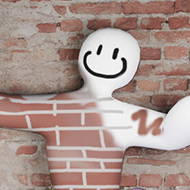
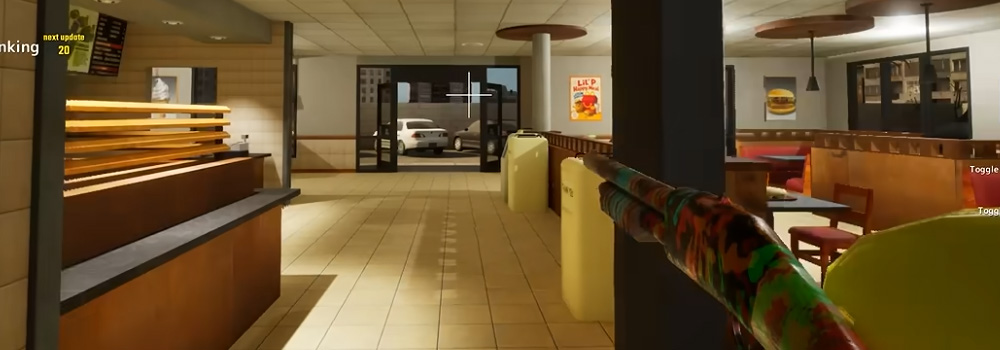
At its core, Meccha Chameleon is a multiplayer hide-and-seek game where Hiders paint their own characters to blend into the environment before Seekers come hunting. Every player begins each round as a featureless, pure-white humanoid figure — no preset disguises, no prop transformations, no shortcuts. What you look like at the end of the preparation phase is entirely the result of your own painting. That design choice is what separates this game from every other prop-hunt title before it.
The name comes from the Japanese dialect word “meccha,” meaning “super” or “very” in Kansai slang — so the title is essentially “Super Chameleon,” which tells you exactly what the game expects from you. The maps range from Hide-and-Seek Mansion and Indoor Country to the Sewer, Backrooms, Penguin Hotel, Sugarland, and Osaka, each demanding different camouflage approaches. A flat-color surface like a uniform wall rewards smart positioning and a clean pose. Complex environments like Sugarland’s layered decorations or the checkered geometry of the Mansion reward high-effort painting that matches patterns line for line.
The community reaction has been remarkable. In five days after launch, Meccha Chameleon passed two million copies without any paid promotion — a fact notable enough that industry veterans publicly called it unthinkable. Steam reviews sit at 88% positive across more than 13,500 ratings at the time of writing. Players on forums describe it as feeling like old-school party games from an era before battle passes and season content. One recurring comment is that this is one of the few multiplayer games where a complete stranger can genuinely fool you and earn your respect for it.
That said, there is a vocal community thread worth acknowledging: the game currently has no keybind remapping for some players, which accessibility-conscious members have flagged loudly on the Steam community hub. The developers have been responsive to feedback overall, with patches addressing everything from pose desync bugs to new characters like Cube being added post-launch, but keybind flexibility remains a real limitation for players who cannot use the default WASD layout.
The Meccha Paint System Explained
| Genre | Multiplayer hide-and-seek, party game |
| Platform | Windows (Steam) |
| Core mechanic | Freehand-paint your character to camouflage against the environment, then freeze in a pose before Seekers hunt |
| Key systems | Meccha Paint system, Eyedropper (Spoid), Pose menu, Ranking system |
| Maps | 7 maps: Hide-and-Seek Mansion, Indoor Country, Sewer, Backrooms, Penguin Hotel, Sugarland, Osaka |
| Game modes | Normal, Increasing Oni, Double |
| Player count | 2–12 recommended (up to 24 depending on host connection) |
The Meccha Paint system is the heart of everything in this game. Press F to open the painting interface and you are looking at something closer to a lightweight art application than a typical game menu. There is a full color wheel, RGB and HSV sliders, preset palette swatches, and — critically — an eyedropper tool the community calls the Spoid. The Spoid lets you click any surface in the environment and copy its exact color onto your character. That single tool is more important than every other part of the paint menu combined.
New players almost always skip the Spoid and try to match colors by eye. This is the single biggest mistake in Meccha Chameleon. Lighting shifts color dramatically between a shadowed alcove and a spot under a ceiling fixture, and what looks like a beige wall in one corner reads completely differently two meters away. Sampling directly from the surface you will be leaning against eliminates that guesswork entirely. After you Spoid a color, the HSV sliders let you nudge it to account for the specific light angle hitting your body — which differs from the flat wall color because your character model has curves and edges that catch light differently.
Two sliders most beginners never touch are metallic and roughness. These control how shiny your surface appears under light. A matte wall has zero gloss; painting yourself the correct color on a glossy body setting still produces a reflective sheen that a careful Seeker will catch immediately. Players who reach a consistent survival rate talk about metallic and roughness as fundamentals, not advanced options. Matching surface gloss is as important as matching surface color.
Beyond color, the Meccha Paint system lets you work on specific body regions — so you can paint your torso one texture, your arms another, and your legs a third. This matters on patterned surfaces like the checkered floors of the Mansion or the tiled grid of the Sewer map. Matching a pattern across your full body in the time available is a serious skill. Players who can replicate tile grout lines or frame borders by hand are operating at a level that makes even veteran Seekers pause and re-examine a wall twice.
Controls and Keybinds
The full default control scheme for keyboard and mouse is listed below. Note that Meccha Chameleon is keyboard and mouse only — there is no official controller support. Patches can change default bindings, so always verify under in-game Settings after an update before joining a lobby.
- WASD — move your character during the preparation phase and, as a Seeker, sweep the map during the hunt
- Mouse look — camera control; lower your sensitivity for Seeker work so you can inspect walls slowly without overcorrecting
- F — open and close the paint menu (Meccha Paint system)
- Left mouse button — apply paint while in the paint menu; confirm a tag on a suspected Hider as Seeker
- Eyedropper / Spoid — sample a surface color directly from the environment (activated inside the paint menu)
- Middle mouse button — rotate the camera around your character while painting; use this to check every angle a Seeker will approach from
- R — open the pose menu (options include standing, crouching, curling, wall-flat, and context-specific poses)
- Spacebar — while wall-stuck, raises your position up the surface to align with a picture frame or shelf edge
- Ctrl — crouch; while wall-stuck, lowers your position down the surface
- 1 — taunt (produces a whistling sound; also used by Seekers in their role)
- 2 — toggle nameplates on or off (Seeker use)
- 3 — toggle the see-through drawing view that highlights painted players through clutter (Seeker use)
- T — text chat with the lobby
- Esc — open Settings; full keybind list and rebind interface is here

The prep timer is what makes controls matter. You have a fixed window to reach your spot, open paint mode, sample and apply colors, and lock a pose before Seekers are released. Players who fumble for the F key or forget to check their back with the middle mouse rotation burn that time fast. Wall-sticking — using the pose menu to flatten your character against a vertical surface — opens up hiding spots like vent covers, framed artwork, and ceiling fixtures that most floor-level players never consider. Once stuck, Spacebar and Ctrl let you slide up and down the wall to align perfectly with whatever object you are mimicking.
Game Modes
Meccha Chameleon ships with three distinct modes, each changing what happens when a Hider is caught. The host selects the mode in the lobby before the round begins. All three use the same core paint-and-hide mechanics, the same prep phase structure, and the same map pool — the difference is in elimination rules and how tension evolves across a session.
Normal is the foundational mode. Seekers win by finding and tagging every Hider before the hunt timer expires. Hiders win if at least one player survives to zero. Caught Hiders are eliminated and either spectate or wait for the next round. Normal mode is the best starting point for new groups because rounds are clean and readable — you always know who is still in, and the win condition is obvious. For groups of two to four players, Normal keeps matches short enough that everyone rotates roles quickly.
Increasing Oni is where the game gets genuinely tense. When a Hider is found and tagged, they do not leave — they switch sides and become an additional Seeker. The longer a round runs, the more Seekers roam the map. Early-game Seekers have to cover the whole level with limited numbers; late-game Hiders face a crowded sweep where multiple Seekers coordinate their angles. This mode is built for larger lobbies where the snowball effect creates panic among the last surviving Hiders, and it is the format most often seen in streamer sessions because the momentum shifts are dramatic on camera.
Double mode runs a full structured round where every player experiences both roles before results are announced. The first half of the session plays as a standard hide-and-seek round; then roles invert and the same players swap sides. Final scores account for performance in both phases. This format is ideal for competitive groups who want a fair comparison of painting and seeking skill within a single session, rather than rotating roles across separate rounds. It is also the mode least dependent on lobby size, since even a small group gets a complete experience from both perspectives.
Outside these three official modes, the game supports custom maps from the Steam Workshop, and host-created servers can set room visibility to private or public. Streamer lobbies typically run as public servers so viewers can join directly — the game officially supports this use case and welcomes streaming, asking only that you include the game name in your stream title.
How a Round Works From Start to Finish
Every match in Meccha Chameleon runs through the same three phases: lobby, preparation, and hunt. Understanding what happens in each phase and when your freedoms change is one of the first things that separates players who survive consistently from those who get caught in the opening twenty seconds.
The lobby phase is where the host sets the mode, map, and player count, then starts the round. Once the preparation phase begins, Hiders are released into the map and Seekers are held. This is your entire painting window. Walk to your intended spot first — do not open the paint menu in the middle of the room. Being caught mid-brushstroke in an exposed position is one of the most common reasons new players fail before the hunt even begins.
During preparation, the goal is to reach a spot, use the Spoid to sample the exact surface color, paint your character, adjust metallic and roughness settings, use middle mouse to inspect every angle, and then lock a pose that makes your silhouette read as part of the environment rather than a crouched person. Once the hunt phase begins, Hiders are frozen. You cannot repaint, cannot reposition, and cannot move without blowing your cover. At that point, the only tool you have left is stillness — and the ranking system introduced in the v1.2.0 update actually rewards you for surviving while in a Seeker’s direct line of sight, not for hiding in the darkest unreachable corner.
Players who internalize that scoring rewards proximity to Seekers change their entire approach. The community term for this is “performing” rather than hiding — the goal is to be right in front of someone and go unnoticed, not to find a hole no Seeker will check. That mental shift is what turns a casual Meccha Chameleon player into a genuinely terrifying Hider.
What Beginners Get Wrong
The most common mistake is treating color as the only variable. New players spend the preparation phase obsessing over getting the hex value exactly right while leaving their elbows, back, and side panels completely white. Seekers know to look for unpainted edges — a perfectly colored torso attached to bright white arms is instantly obvious from any angle. Paint the whole body before you refine any single section.
- Guessing colors instead of using the Spoid — the eyedropper samples the actual surface, accounting for lighting at that exact point
- Ignoring the metallic and roughness sliders — a correct color on a shiny body still reflects light wrong against a matte wall
- Opening the paint menu before reaching a spot — standing in the center of a room while painting gives Seekers an obvious target the moment they drop in
- Choosing poses that look like crouching rather than objects — a pose that reads as “person trying not to be seen” is worse than a slightly imperfect color that reads as furniture
- Picking the same spot across multiple rounds on the same map — veteran players on maps like Indoor Country and Osaka know every obvious corner, and a predictable Hider is an easy tag
Players who primarily enjoy reflex-based shooters often struggle early because Meccha Chameleon rewards patience over speed. The preparation phase is not a race to the best hiding spot — it is a deliberate process that requires you to study the environment, identify what shapes and colors are present, and construct a disguise that will survive visual inspection. Speedrunning through paint application almost always produces a disguise that falls apart under even a casual Seeker sweep.
Early in the game, most new Hiders gravitate toward the darkest corners and most enclosed spaces available — inside cabinets, behind large furniture, in ceiling crawlspaces on maps that have them. This strategy works exactly once per lobby. Once Seekers know your corner preference on a map, they check it first in every subsequent round. The players who last across an entire session rotate completely unpredictable spots and treat each round as a clean puzzle.
Advanced Techniques Most Players Skip
Wall-sticking is the most underused technique in Meccha Chameleon outside of competitive lobbies. The pose menu includes a wall-flat option that attaches your character to any vertical surface, at which point Spacebar and Ctrl adjust your height. A Hider who has matched the color of a wall segment and flattened themselves to it is nearly invisible at a glance — the silhouette reads as wall art, a mounted panel, or a vent cover, depending on pose and height. Most new players never try this because they default to floor-level logic from other games.
- Use the third-person camera inspection rotation before locking your pose — check the exact angle from the map’s main entrance doors, because that is the first view Seekers get when they enter a room
- Paint in the lighting conditions of your final position, not standing in the middle of the room — colors shift substantially between your starting position and your final spot
- Save color palettes between rounds on the same map using the theme-save function — returning to a strong spot on Sugarland or the Mansion is faster when you do not resample every color from scratch
- On busy maps like Indoor Country and Sugarland, mimic objects with distinct shapes rather than blending into flat surfaces — a player curled into a balloon or shaped like a stacked box survives longer than one painted flat against a wall with no structural logic
By the time you reach lobbies where multiple players are running the Increasing Oni mode and the Seeker count is growing, the Spoid becomes genuinely tactical. Experienced Hiders sample color not just from their immediate surface but from the shadow that falls across their final position — because a body in shadow reads darker than the unlit wall beside it. Getting the shadow color right means surviving a Seeker who slows down and looks carefully, not just one who walks past quickly.
There is a specific moment that experienced players recognize: a Seeker stopping two or three steps away, head rotating left and right at a steady pace. That hesitation means they sensed something but cannot confirm it. The temptation to shift slightly, to check whether they are about to tag you, is intense — and it almost always gets you caught. The stillness required to let that moment pass is something players describe as genuinely hard to maintain. It is the purest test Meccha Chameleon runs on you, and surviving it is more satisfying than surviving any combat encounter in more conventional multiplayer games.
“I’ve played a hundred prop-hunt games and nothing made me feel like an actual chameleon until this one. The paint system changes everything.”
“Got found four times in a row because I kept leaving my back unpainted. Third-person rotation during prep is the most important habit you can build.”
“The Increasing Oni mode with eight players is pure chaos in the best way. Last Hider standing feels like a horror game where you are the monster that isn’t moving.”
“Osaka map is the hardest one in the game. Too many patterns to match and the lighting changes across the space. You have to commit to one small section and nail it.”
FAQ
Does Meccha Chameleon have a ranking or progression system?
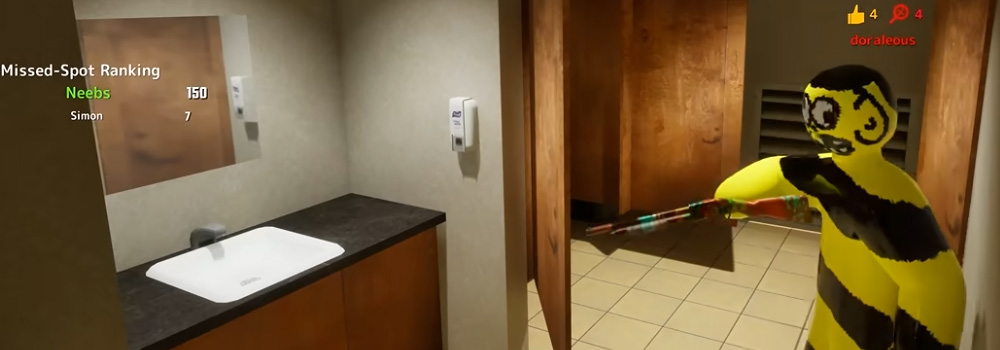
Yes, the v1.2.0 update added an official ranking system that works differently from most multiplayer games. As a Hider, your score is based on how long you remain within a Seeker’s direct line of sight without being caught — meaning a perfectly disguised player who hides near the main patrol route scores higher than one who tucks into an unreachable corner. Seekers receive a Missed Spot and Missed Enemies ranking that tracks which Hiders they walked past. The system deliberately rewards dangerous, high-visibility hiding over passive survival, which is why skilled players talk about “performing” in front of Seekers rather than simply staying hidden.
How many players can you have in a Meccha Chameleon lobby?
The recommended player count is 2 to 12, though the game can support up to 24 players depending on the host’s internet connection quality. The host creates the server and sets room visibility — private for friend groups and public for open lobbies or streamer sessions where viewers can join freely. Large lobbies above 12 players can create desync issues with Hider positions, which the developers have been patching actively. For new groups, 4 to 8 players gives the best balance between enough Seekers to create pressure and enough Hiders to make individual rounds unpredictable.
What is the difference between the eyedropper and the color picker in the paint menu?
The eyedropper, called the Spoid in community vocabulary, samples color directly from any surface in the 3D environment — it reads the actual rendered color at the exact lighting conditions of that point in the world. The color picker is a manual tool with a color wheel, RGB sliders, and hex input for adjusting or selecting colors without referencing the environment. The Spoid is almost always the right tool to use first, because it captures lighting conditions the manual picker cannot replicate by eye. After Spoid-sampling, the HSV sliders inside the color picker let you fine-tune the result to account for differences in how light falls on your curved character model versus the flat wall beside you.
Meccha Chameleon is one of those games that shows you its full depth slowly, one discovered technique at a time. Your first round is pure chaos. Your tenth starts to feel like craft. By the time you are matching Sugarland’s layered candy textures with the Spoid and adjusting roughness to match the matte finish of a candy wrapper prop, you realize the game was never really about hide-and-seek at all — it was always about attention, patience, and whether you can hold still while a Seeker stares right through you. The maps, the Meccha Paint system, the wall-sticking poses — all of it feeds that single, perfect moment when someone chooses not to tag you. Nothing else in the game comes close.
Comments
There are no reviews yet. Be the first one to write one.